


Clubhouses do significant work every day. For the continuity of operations, it is important that this work is reported externally and that Clubhouses are also able to evaluate and verify their own effectiveness.
The effectiveness of clubhouses
The first example: The annual cost of two psychiatric inpatient beds is equivalent to the annual cost of operating one Clubhouse. Participation in Clubhouse activities reduces the need for psychiatric hospitalization for new members.
Source: Mental Health Rehabilitation Clubhouses – Community support and individual rehabilitation, RAY evaluation study 2009.
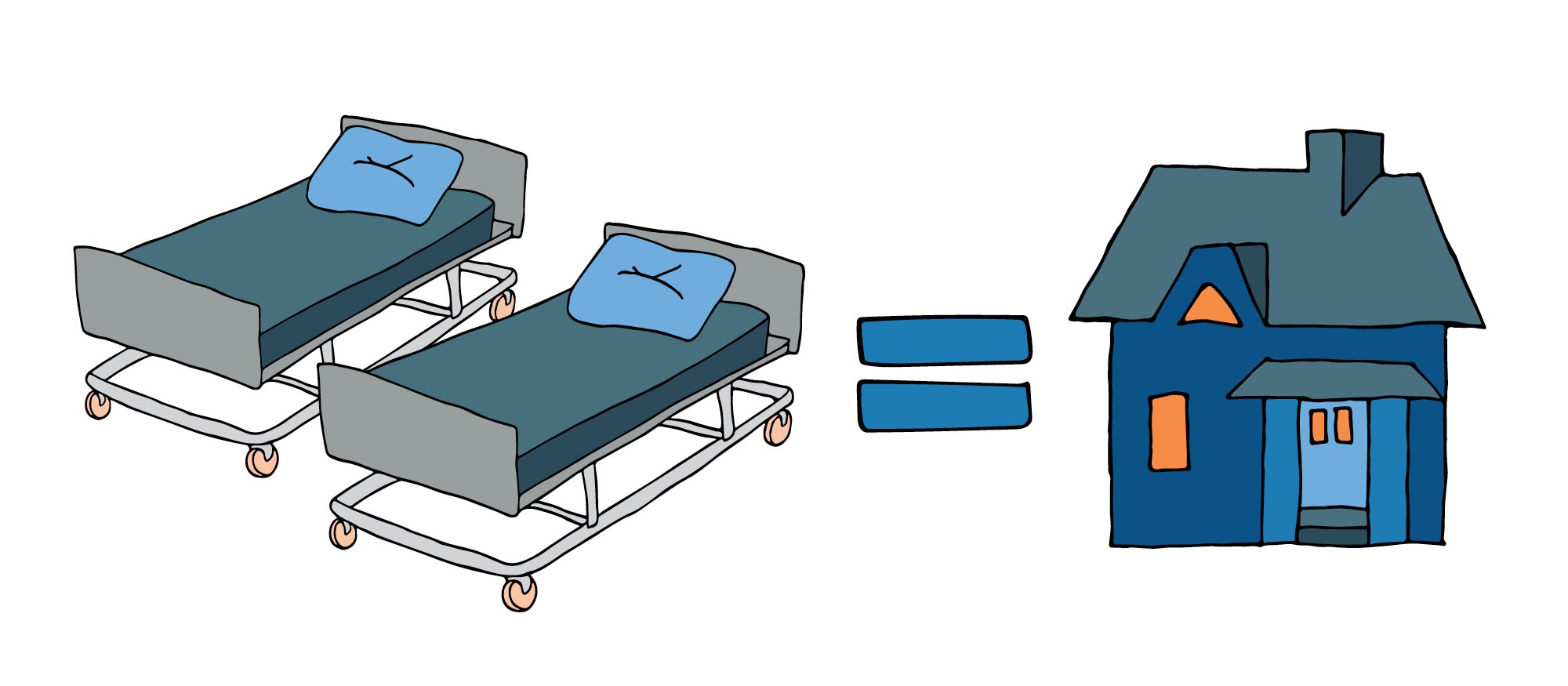
The annual cost of two psychiatric ward beds is equivalent to the annual operating costs of one Club House. Photo: Peppi Laine
Another example: When one euro is invested in the Clubhouse, it generates €4.57 in savings on psychiatric medical care costs for new Clubhouse members.
Source: ESKOT ry:n ROI-laskelma 2018.
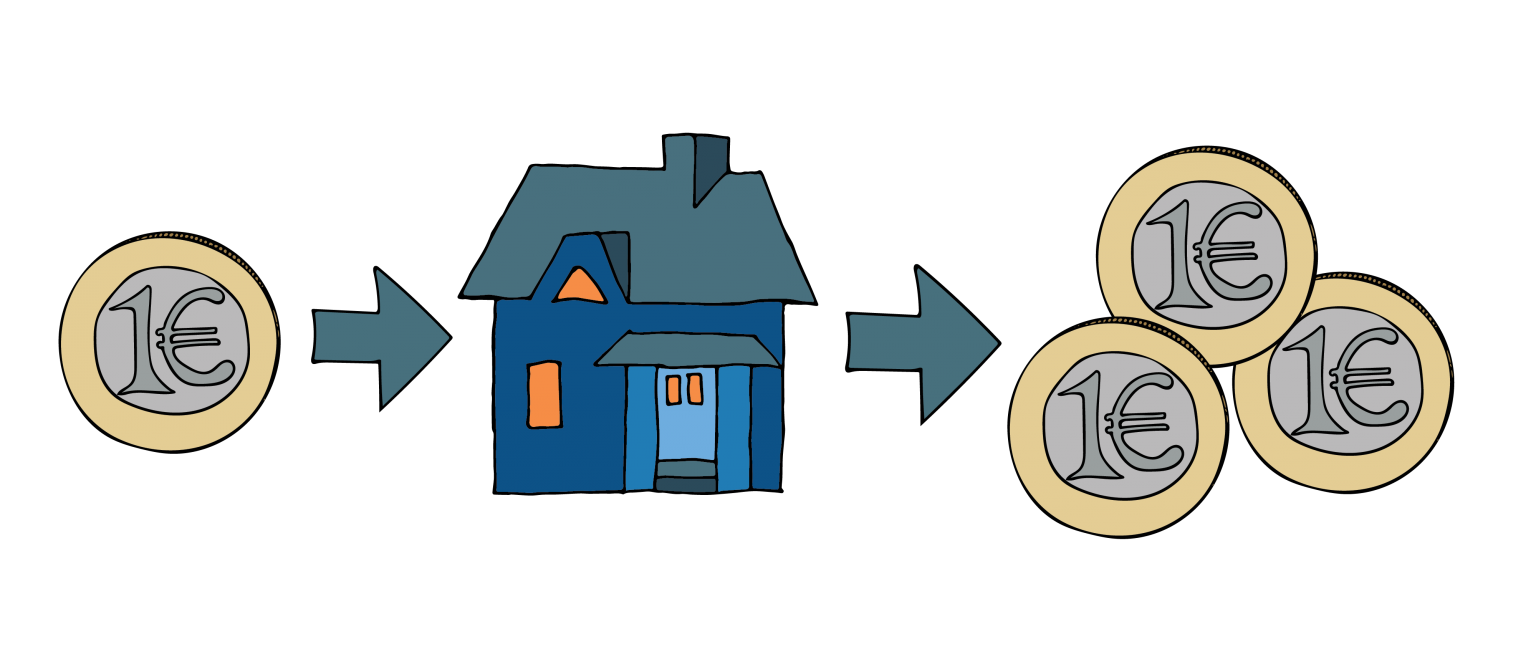
Klubitalopajatso: When one euro is invested in the Club House, it generates a saving of €4.57. Image: Peppi Laine
Knowledge-based leadership at Clubhouses
Leading with information at the national, regional and member levels guides all our operations. During 2019–2021, the data collection and reporting methods of our network of 23 Clubhouses have been unified, and the Salesforce platform we use as our member information system has been developed to be clearer and better reflect the impacts of clubhouse operations. We also utilize, among other things, various member satisfaction and stakeholder surveys.
Background and purpose
The International Clubhouse Movement began in New York City in 1944, when a small group of outpatients who had been discharged from a large local mental hospital decided to keep in touch with each other. This group called itself WANA, or We Are Not Alone. They sought to avoid the isolation and loneliness that is all too typical of many people with mental health problems. The group kept in touch with those who had been released from the hospital and they met each other in cafes, libraries and at the YMCA.
In 1948, WANA secured funding to acquire its own meeting space. The building on 47th Street in midtown Manhattan was named Fountain House. In 1955, WANA hired John Beard as its director. John Beard was an enthusiastic young social worker. He realized that hospitals, clinics, medication, and therapy could be helpful for the acute symptoms of mental illness, but they did little to help with the side effects of the illness: poverty, inactivity, unemployment, loneliness, and isolation.
Beard firmly believed that people with long-term mental illness had the right to meaningful work, meaningful activities, and respect and self-respect. He believed that people could be rehabilitated as functioning members of society and, with support, return to work. John Beard developed the Clubhouse as it is known today. Beard conceived the idea of the Fountain House, a place where people were members, not patients or customers. A house with only a few employees and so many members that the employees were forced to rely on the work of the members. The operation of the Clubhouse, hiring employees, arranging financing, planning activities and utilizing opportunities is a collaboration between members and employees.
Fountain House Clubhouses gradually began to spring up across the United States and later around the world. In 1976 Fountain House received funding to launch an international training program. This began training members and staff from around the world.
In 1978, Swedish journalist Lise Asklund made a 45-minute television documentary about Fountain House. It inspired the opening of Europe’s first Clubhouse in Stockholm in 1980. Today, there are over 400 Clubhouses operating on the Fountain House model around the world. The International Clubhouses’ umbrella organization, ICCD, currently has 284 Clubhouses. In 1989, a group of members and staff of the International Clubhouse Community met and drew up the first Clubhouse Standards. These 35 standards are reviewed and updated every two years at the International Clubhouse Seminar.
In 1994, the ICCD (International Center for Clubhouse Development) was founded. The purpose of ICCD is to coordinate the international Clubhouse movement and maintain a high quality of operations. ICCD, among other things, draws up standards that guide Clubhouse operations. Today, ICCD is called CI (Clubhouse International) and the European Clubhouse Network Association CE (Clubhouse Europe) has been established for European clubhouse communities.
Finland’s first Clubhouse, Näsinkulma, opened in Tampere in 1995. There are currently 23 Clubhouses in Finland, for which the Finnish Clubhouses Association has been established. The Porvoo Clubhouse was established in 2002.

 Porvoon Klubitalo